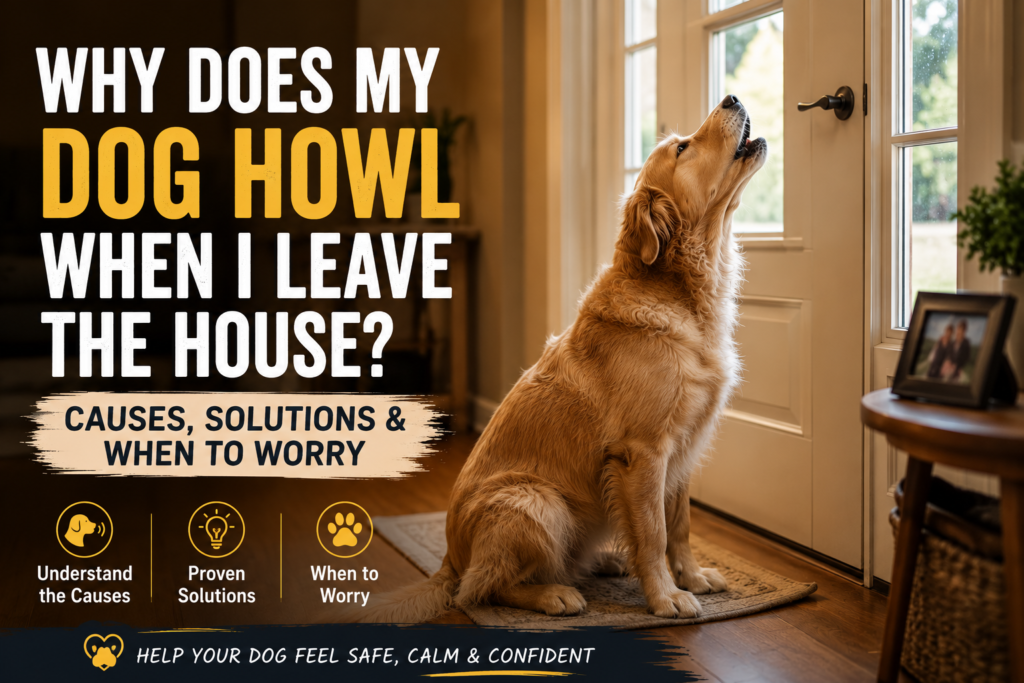
You slip out of the front door, and before you even reach your car, it begins: a long, mournful cry that follows you down the street and lodges itself in your chest. If you have ever discovered that your dog howling when left alone is the soundtrack to every departure, you already know how heart-wrenching that sound can be. It stops you in your tracks, floods you with guilt, and leaves you wondering whether your beloved companion spends every single absence in distress.
Here is the reassuring truth you need first: howling is communication, not misbehaviour. Your dog is not being spiteful, dramatic, or “naughty”, they are using one of the oldest, most instinctive voices they own to tell you something important. And once you understand what that howl actually means, you can respond in a way that genuinely helps. In this guide, you will learn why dogs howl, why the behaviour so often erupts the moment they are left alone, how to tell ordinary howling apart from true separation anxiety, and eight proven, kind methods to bring the peace back to your home.
Why Do Dogs Howl in the First Place?
Before we focus on the dog howling when left alone, it helps to understand howling as a whole. Howling is not a random noise; it is a deeply wired form of canine language that predates domestication by tens of thousands of years. When you know what it is for, the behaviour suddenly makes far more sense.
Ancient Instincts Inherited From Wolves
Your dog shares the vast majority of their DNA with the wolf, and howling is one of the clearest echoes of that heritage. Wolves howl to signal their location across long distances, to rally the pack before a hunt, and to warn rivals away from their territory. Even the fluffiest lap dog carries this instinct. So when your dog throws their head back and lets out a howl, they are, in a very real sense, speaking an ancestral language.
Pack Behaviour and Staying Connected
Dogs are profoundly social animals, and they view you and your family as their pack. In the wild, a howl is a long-distance “where are you?” that helps scattered pack members find their way back to one another. Your dog uses the same tool. When you leave, howling becomes their attempt to reconnect with the pack that has suddenly vanished, a vocal beacon they hope will bring you home.
A Response to Sounds and Triggers
Many dogs howl in answer to specific sounds. Sirens, musical instruments, other dogs howling nearby, and even certain high-pitched noises on the television can all set them off. This kind of howling is usually harmless and instinctive, your dog is simply joining in with a sound their brain interprets as another “voice” calling out.
Breed Differences Matter
Some breeds are natural-born howlers, while others rarely make the sound at all. Huskies, Malamutes, Beagles, Bloodhounds, Coonhounds, and Dachshunds are famously vocal because they were bred for jobs that rewarded loud, carrying voices. If you share your home with one of these breeds, occasional howling is simply part of the package, though, as we will see, that does not mean distress howling should be ignored.
Why Your Dog Is Howling When Left Alone
Now we reach the heart of the matter. A dog howling when left alone is usually reacting to one or more specific triggers, and pinpointing the right one is what turns guesswork into an effective plan. Let us look at the most common causes.
Separation Anxiety
This is the cause most owners fear, and for good reason. When a dog is genuinely anxious about being apart from their person, their body floods with stress hormones the instant the door closes. Howling becomes a panicked, desperate call for the return of their safe person. If your dog howling when left alone is paired with pacing, drooling, or destruction, separation anxiety is a strong possibility. Our in-depth guide on dog separation anxiety and its 15 signs, causes and how to calm your dog fast walks through the full recovery plan step by step.
Boredom and Under-Stimulation
Not all howling is anxiety. A great deal of it is plain boredom. A dog with an active brain and nothing to do will fill the silence with sound, and howling is an easy, self-rewarding outlet. If your dog is left with no toys, no chews, and no mental challenges, howling may simply be their way of passing a long, empty day.
Loneliness and the Need for Company
Because dogs are so social, some genuinely struggle with solitude even when they are not clinically anxious. The ASPCA notes that dogs frequently howl because they are lonely, especially when left alone for long stretches. This kind of howling is a heartfelt “I miss you” rather than a full-blown panic, but it still deserves a compassionate response.
Environmental Triggers
Sometimes the world outside sets your dog off the moment you are gone. Passing sirens, a neighbour’s dog, the doorbell, delivery vans, or fireworks can all spark howling in an otherwise settled dog. Because you are not there to reassure them, these triggers land harder and the howling lasts longer than it would if you were home.
Is Your Dog’s Howling When Left Alone Actually Separation Anxiety?
This is the question that keeps worried owners awake at night, and getting the answer right genuinely matters. Occasional howling and true separation anxiety call for very different responses, and treating one as the other wastes time and effort. The good news is that the difference is usually easier to spot than you might think.
As a rough rule, a dog with mild, ordinary howling protests for a few minutes and then settles, eats, and sleeps. A dog with genuine separation anxiety cannot settle at all, escalates rather than calms, and often shows physical signs of panic that last the entire absence. The table below breaks down the key differences at a glance.
| Behaviour | Occasional / Normal Howling | Possible Separation Anxiety |
|---|---|---|
| Timing | Howls briefly, then settles within 5-15 minutes | Starts within seconds and continues for 30+ minutes or the whole absence |
| Intensity | A few howls, often in response to a sound | Frantic, relentless howling, barking and screaming |
| Body language | Relaxed once settled; naps and plays | Pacing, trembling, drooling, panting; cannot rest |
| Eating | Happily takes a treat or chew when alone | Refuses all food until you return |
| Destruction | None, or idle chewing of a toy | Targets doors and windows trying to escape |
| Triggers | A siren, doorbell or passing dog | Your departure itself, plus pre-departure cues |
| On your return | Pleased but calms quickly | Frantic, over-the-top greeting lasting several minutes |
If your dog’s behaviour sits firmly in the right-hand column, you are likely dealing with separation anxiety rather than habit or boredom, and a structured desensitisation plan will serve you far better than quick fixes.
Signs Your Dog Needs Help, Not Just Patience
Howling is the sound you hear, but a struggling dog usually shows several signs at once. The single most useful thing you can do is set up a phone or pet camera and watch the first 30 minutes after you leave. Keep an eye out for the following warning signs, because when they cluster together, they point to genuine distress rather than a passing grumble.
- Excessive barking alongside the howling, starting within seconds of the door closing and refusing to ease off.
- Persistent whining and crying in long, repetitive bouts rather than a few short protests.
- Pacing back and forth along the same path, very often near the door you left from.
- Destruction aimed at exits, scratched doors, chewed frames, and torn window sills as your dog tries to follow you.
- Indoor accidents from a dog who is otherwise perfectly house-trained, because stress loosens bladder and bowel control.
- Shaking or trembling that may begin before you even leave, triggered by the sight of your keys or coat.
- Excessive drooling, shown by a damp chest or wet patches on the bed when you return.
One or two mild signs that fade quickly usually just mean your dog is still learning. Several intense signs that last the whole absence mean it is time to slow your training right down and take the problem seriously.
8 Proven Ways to Reduce Dog Howling When Left Alone
Here is the practical heart of the guide. These eight methods work best as a combined plan rather than in isolation, but you can begin with whichever fits your dog and your routine. Above all, work patiently, calm consistency beats speed every single time, and rushing the process is the number one reason owners see no progress.
1. Rule Out Medical Causes First
Before you change anything else, book a vet visit. Pain, hearing loss, and canine cognitive dysfunction in older dogs can all trigger sudden howling that looks like anxiety but is actually discomfort. Notably, hidden joint pain is a common culprit, our article on the signs your dog has joint pain explains exactly what to watch for. Treating an underlying medical issue can resolve the howling entirely.
2. Desensitise Your Departure Cues
Your dog learns to predict your exit long before you reach the door. To break that panic chain, practise your leaving cues without actually leaving. Pick up your keys twenty times a day and set them down again. Put your coat on, then sit on the sofa. Repeat until these signals mean nothing. Consequently, the anticipatory dread that fuels the howling begins to fade.
3. Build Alone Time in Tiny Increments
Start with just five seconds on the other side of the door, then ten, then thirty. Always return before your dog starts to howl, and always come back during a calm moment. Mix the durations up so your dog cannot predict a long absence. Over days and weeks, you gradually stretch the time until leaving the house no longer triggers a single howl. Pushing too fast, however, undoes progress instantly.
4. Tire the Brain and Body Before You Leave
A tired dog is a quiet dog. Offer a good walk plus ten minutes of sniffing games or training before any planned departure, because mental tiredness is even more calming than physical exercise. Time it so your dog is ready for a nap right as you head out the door, and much of the howling simply never begins.
5. Turn Alone Time Into Something Wonderful
If your departure reliably predicts something delicious, your dog starts to look forward to it instead of dreading it. Trainers call this counter-conditioning. Choose a high-value treat your dog only ever gets when alone, a stuffed Kong, a lickmat, or a food puzzle, and hand it over the moment you leave. Over time, the front door closing becomes the cue for the best part of the day rather than the worst.
6. Provide Enrichment and Comfort Toys
A busy brain cannot howl. Puzzle feeders, treat-dispensing toys, and durable chews give your dog a genuine job to do through the riskiest first twenty minutes alone. Rotate two or three toys so novelty keeps them interesting, and always test a new toy under supervision first. Enrichment tackles the boredom-driven howling directly and takes the edge off mild loneliness too.
7. Create a Calm, Sound-Softened Safe Zone
Silence makes every siren and slammed car door sound alarming. Leave soft classical music, a dog-specific calming playlist, or low-volume talk radio playing as you go; studies suggest classical and reggae music can genuinely lower canine stress. Pair that with a dedicated comfy bed, a worn t-shirt that smells of you, and a familiar chew, and you give your dog an anchor of calm to settle into.
8. Keep Goodbyes and Hellos Boring
Long, emotional farewells spike your dog’s arousal at the worst possible moment, and frantic reunions teach them that your return is a huge event worth panicking for. Instead, ignore your dog calmly for a few minutes before you leave and for a few minutes after you return. It feels harsh at first, but it quietly teaches your dog that comings and goings are simply no big deal.
Common Mistakes Owners Make (And Why Punishment Backfires)
Even the most loving owners fall into a few traps that quietly make the howling worse. The biggest of these is punishment. When you come home to noise complaints or a scratched door and scold your dog, you achieve nothing useful, your dog cannot connect your anger to something they did twenty minutes ago. All they learn is that your return is frightening, which deepens the very anxiety driving the howl.
Anti-bark and anti-howl shock or spray collars are an especially damaging shortcut. They suppress the symptom while leaving the underlying fear untouched, and they often make an anxious dog considerably more distressed. Here are the mistakes to steer clear of:
- Punishing the howling. Shouting or scolding on your return only adds fear and confusion.
- Using aversive collars. Shock and spray devices treat the noise, not the emotion, and frequently worsen anxiety.
- Being inconsistent. Rushing back when the howling peaks teaches your dog that howling brings you home.
- Rushing the timeline. Jumping from one minute to one hour collapses weeks of patient progress.
- Getting a second dog as a “cure”. Most dogs are bonded to you, not to other dogs, so this often doubles the noise.
- Relying on gadgets alone. Cameras, music, and toys all help, but none replace gradual training.
Products That Can Help a Dog Howling When Left Alone
No product will ever replace patient training, but the right tools genuinely support the process by keeping your dog occupied, comforted, and calm during those crucial first minutes alone. Here are a few options from our own range that add real value when howling is driven by boredom, loneliness, or mild stress.
- A comforting plush toy. A soft, snuggly companion can soothe a lonely dog through a quiet house. Our Plush Capsule Dog Toy with Squeaker gives an anxious dog something gentle to cuddle and carry while you are gone.
- A durable enrichment chew. Redirecting nervous energy into healthy chewing works wonders. The Squeaky Chicken Latex Chew Toy is designed specifically for boredom relief, keeping busy mouths and minds occupied.
- A dedicated safe-zone bed. A supportive, den-like resting spot helps your dog associate alone time with comfort. Our washable Orthopaedic Pet Sofa Bed makes an ideal calm-down corner, especially for older or achy dogs whose discomfort may fuel restlessness.
- Absorbent training pads. Because stress can loosen bladder control, keeping Large Puppy Training Pads nearby takes the worry out of the occasional anxiety-related accident while you build your dog’s confidence.
Choose the tools that match your dog’s particular trigger. A bored dog needs enrichment; a lonely dog needs comfort; an achy senior needs supportive rest. Used alongside the training above, these products help turn “you are leaving” into “good things happen”.
When to Contact a Professional
Most dogs improve steadily with the methods above, but some need expert support, and recognising that early is a sign of a responsible owner, not a failure. Reach out for professional help if your dog shows any of the following:
- Severe, unrelenting distress that does not ease at all after four to six weeks of patient, consistent work.
- Signs of self-harm such as broken nails, bloody paws, damaged teeth, or raw skin from escape attempts.
- Extreme symptoms including non-stop howling for the entire absence, total refusal of food, vomiting, or soiling from panic.
- Sudden howling with no clear trigger, especially in an older dog, which always warrants a vet check.
Always start with your vet to rule out pain or medical causes. From there, ask for a referral to a qualified, force-free behaviourist. In the UK, look for someone registered with the ABTC or APBC. Genuine separation anxiety sometimes benefits from a combined plan of behaviour modification and, in severe cases, short-term medication prescribed by your vet. This is not giving up, it is giving your dog the best possible chance to feel safe.
Frequently Asked Questions About Dog Howling When Left Alone
Is howling always a sign of separation anxiety?
No. While howling can be a symptom of separation anxiety, it is often caused by boredom, loneliness, breed instinct, or a response to sounds like sirens. The key is to look at the whole picture, pacing, drooling, destruction, and refusing food alongside the howling point to anxiety, whereas a few howls that quickly settle usually do not.
Should I ignore my dog when he howls?
It depends on the cause. Ignoring brief, attention-seeking howls (and rewarding the quiet that follows) is sensible. However, ignoring a genuinely panicked dog is neither kind nor effective and can deepen the fear. If your dog cannot settle at all, do not simply let them “cry it out”, instead, shorten your absences so they can succeed.
Why does my dog howl at the door the moment I leave?
Howling at the door is your dog’s long-distance “come back” call, aimed at the exact spot where you disappeared. It reflects the pack instinct to reunite with a missing member. Desensitising your departure cues and building alone time gradually are the most effective ways to ease this specific behaviour.
Will my puppy grow out of howling?
Many puppies grow more confident as they mature, particularly with good early alone-time training. Yet howling rarely fixes itself if it is ignored or worsened by inconsistency. The habits you build now decide whether your puppy grows out of it or into a more anxious adult. If your pup also barks and cries, our guide on how to stop a puppy barking when left alone pairs perfectly with this article.
What breeds howl the most?
Vocal breeds include Huskies, Alaskan Malamutes, Beagles, Bloodhounds, Coonhounds, Basset Hounds, and Dachshunds. These dogs were bred for jobs that rewarded a loud, carrying voice, so occasional howling is entirely natural for them. Even so, distress howling in these breeds still deserves attention rather than dismissal.
Why is my dog suddenly howling when he never used to?
A sudden change in howling behaviour warrants a vet visit first. Pain, hearing loss, and cognitive decline in older dogs can all trigger new howling. Changes at home, a new routine, a house move, a lost companion, or a return to the office after time at home, are other common triggers worth considering.
Does a howling dog mean something bad is going to happen?
No. The old superstition that a howling dog predicts death or disaster is folklore, not fact. Howling is simply canine communication, a call to the pack, a response to a sound, or an expression of boredom or stress. There is nothing supernatural about it.
How long can I leave my dog alone?
Most adult dogs cope with around four hours alone, though this varies with age, health, and temperament. Puppies need far shorter absences. Crucially, building up to longer periods gradually is exactly what prevents howling in the first place, so never jump straight to a full working day.
Do calming aids and music really reduce howling?
They genuinely can, as part of a wider plan. Soft classical music masks alarming outside noises and soothes many dogs, while pheromone diffusers and calming chews help take the edge off mild stress. They work best alongside gradual departure training rather than as a standalone fix.
Why does my dog howl when I come home too?
Howling on your return is usually pure excitement and relief, your pack member is back, and your dog wants to celebrate. Keeping your greetings calm and low-key helps this settle. If the reunion howling is frantic and prolonged, however, it may signal that your dog was distressed for the whole absence.
Can getting a second dog stop the howling?
Usually not. Most dogs howling when left alone are bonded specifically to their human, not to other dogs, so a second dog often means double the noise rather than a cure. Focus on building your dog’s individual confidence first before considering another pet.
Final Thoughts: Your Dog Is Asking for Reassurance, Not Being Difficult
If you take one thing away from this guide, let it be this: a dog howling when left alone is not defiance, it is a deeply social animal calling out for the pack it loves. Every howl is a sentence in a language your dog is still learning to put down, and once you understand what they are trying to say, you can answer with exactly the reassurance they need.
Start by ruling out medical causes, then work patiently through gradual departures, enrichment, exercise, a calm safe zone, and low-key goodbyes. Avoid punishment, resist the temptation to rush, and remember that progress will not be a straight line. Some days your dog will surprise you; other days you will repeat a step. That is completely normal.
Take one small step today, pick up your keys, then sit back down; step outside for five calm seconds, then return. Five seconds becomes five minutes, five minutes becomes an afternoon, and one day you will close the door to happy, peaceful silence. Your calm, consistent presence is the most powerful medicine your dog will ever receive, and the trust you build through this journey will last a lifetime.