Your dog used to bound off the sofa like a puppy launched from a cannon. Now, there is a pause. A slight hesitation before standing. Maybe a soft groan when lying down. You notice it more on cold mornings or after a long walk, and something in your chest tightens because you know your dog is trying to hide it.
Joint pain in dogs is one of the most common yet underdiagnosed conditions in veterinary medicine. An estimated one in five adult dogs in the UK suffers from some form of osteoarthritis, and that number rises sharply after age seven. The difficult truth is that dogs are hardwired to mask discomfort. By the time you notice a limp, the problem may have been developing for months. Finding the right orthopaedic dog bed for joint pain is one of the simplest and most effective steps you can take to help.
The good news is that early recognition and simple environmental changes can dramatically improve your dog’s quality of life. And one of the most effective, most overlooked interventions is something your dog uses every single day: their bed.
This guide will walk you through the warning signs of canine joint pain, explain why your dog’s sleeping surface matters more than you think, and show you practical steps to support your dog’s comfort at every stage of life.
Understanding Joint Pain in Dogs
Joint pain in dogs, broadly referred to as canine arthritis or osteoarthritis, occurs when the protective cartilage between bones deteriorates over time. Without that cushioning, bones rub together during movement, creating inflammation, stiffness, and pain.
While age is the primary factor, joint problems are not exclusive to senior dogs. Larger breeds such as Labradors, German Shepherds, and Golden Retrievers are genetically predisposed to conditions like hip dysplasia and elbow dysplasia, sometimes showing symptoms as early as two years old. Overweight dogs of any breed carry additional stress on their joints, accelerating wear and tear. Previous injuries, even minor ones from boisterous play, can also set the stage for chronic problems later.
What makes joint pain particularly challenging is its gradual onset. Dogs do not wake up one morning unable to walk. Instead, the condition creeps in slowly, and because dogs instinctively avoid showing vulnerability, owners often attribute early signs to normal ageing or tiredness.
Seven Warning Signs Your Dog May Have Joint Pain
Recognising the early indicators of joint discomfort can make a significant difference in your dog’s long-term mobility. Here are seven signs every dog owner should watch for.
Reluctance to jump or climb stairs. If your dog once leapt onto the bed without a second thought but now stands at the edge looking up, this is often the first noticeable sign. Avoiding stairs, hesitating before getting in the car, or refusing to jump down from furniture all point to discomfort during high-impact movements.
Stiffness after rest. Pay close attention to how your dog moves in the first few minutes after waking up or lying down for an extended period. Stiff, slow, or awkward movement that gradually loosens up is a hallmark of joint inflammation.
Changes in gait or posture. Limping, favouring one leg, or shifting weight away from a painful limb are clear indicators. Some dogs develop a noticeable bunny hop when running, using both back legs simultaneously to reduce strain on an affected hip.
Decreased activity or enthusiasm. A dog that once pulled you toward the park but now seems content to stay home may not be lazy. Reduced interest in walks, play, or physical interaction can be a quiet signal that movement has become painful.
Excessive licking of joints. Dogs often lick areas that hurt. If you notice your dog repeatedly licking or chewing at their elbows, hips, wrists, or knees, they may be trying to soothe an aching joint.
Irritability or behavioural changes. Pain changes behaviour. A normally gentle dog may snap when touched in a sensitive area, withdraw from family interaction, or show signs of anxiety around activities they associate with discomfort.
Difficulty settling at night. Restlessness during sleep, repeatedly shifting positions, or avoiding their bed altogether can indicate that lying down is painful. This is one of the most telling signs that your dog’s sleeping environment needs attention.
Why Your Dog’s Bed Matters More Than You Think
Most dog owners invest carefully in food, vaccinations, and exercise. However, the surface your dog sleeps on for ten to fourteen hours a day rarely receives the same consideration. This is a significant oversight, because sleeping posture and surface quality directly affect joint health.
A flat, unsupportive bed or a hard floor does nothing to distribute your dog’s body weight evenly. Pressure concentrates at the hips, shoulders, and elbows, the very areas most vulnerable to arthritis. Over time, this creates a cycle: poor sleep surfaces contribute to joint inflammation, which causes pain, which disrupts sleep, which prevents healing.
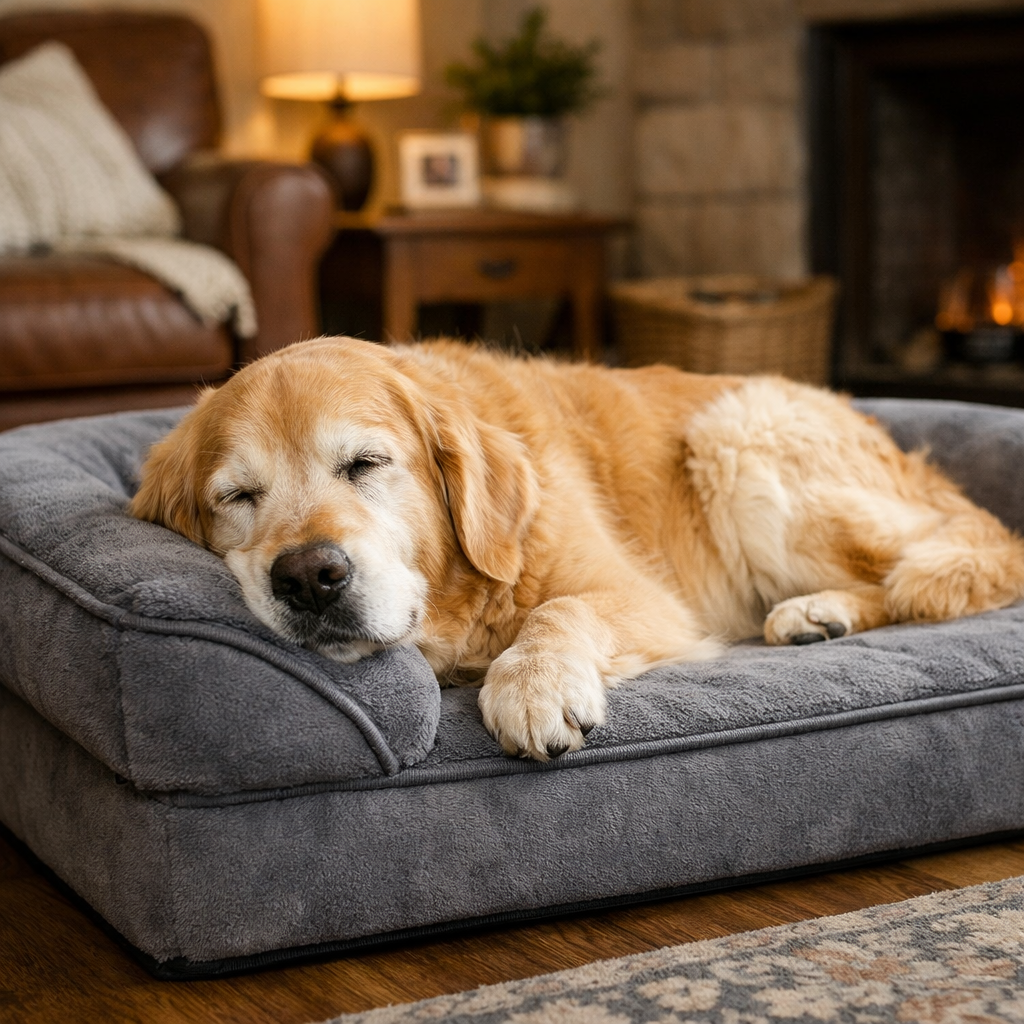
An orthopaedic dog bed for joint pain addresses this cycle at its source. These beds are engineered with supportive foam or cushioning that moulds to your dog’s body shape, spreading weight across a larger surface area and relieving pressure on sensitive joints. The raised bolster edges common in sofa-style designs also provide a comfortable surface for dogs who prefer to rest their heads while sleeping, supporting the neck and spine in a more natural alignment.
The PDSA, one of the UK’s leading veterinary charities, specifically recommends memory foam and orthopaedic beds for dogs with arthritis as part of a broader joint care plan. It is one of the simplest changes an owner can make, and the benefits are often visible within days.
How to Choose the Right Orthopaedic Dog Bed for Joint Pain
Not all orthopaedic beds are created equal. When evaluating options, focus on these key factors.
- Supportive cushioning. The core material should be dense enough to support your dog’s weight without bottoming out, but soft enough to conform to their body shape. High-quality foam or layered cushion construction is ideal.
- Raised or bolstered edges. Sofa-style beds with raised sides give your dog something to lean against, providing additional joint support and a sense of security that encourages deeper rest.
- Removable, washable cover. Dogs with joint pain may have reduced mobility, which can mean more accidents or drool around their sleeping area. A machine-washable cover is essential for hygiene and convenience.
- Appropriate sizing. Your dog should be able to stretch out fully without hanging off the edge. Measure your dog from nose to tail while lying down and add several centimetres for comfort.
- Durable construction. A quality orthopaedic bed should maintain its structure and support over months of daily use. Look for reinforced seams, sturdy base materials, and covers designed to withstand regular washing.
The Orthopaedic Pet Sofa Bed from Cuteness of Dogs checks each of these boxes. Its plush, cushioned surface with cosy faux fur provides genuine comfort, while the raised edges create a supportive, nest-like space for your dog to settle into. The removable cover is machine-washable, keeping maintenance simple, and its durable construction is built for everyday use. At 76 cm x 53 cm x 23 cm, it offers generous space for small to medium dogs to stretch and relax.
Five Common Mistakes Dog Owners Make with Joint Pain
Even well-meaning owners can inadvertently worsen their dog’s joint issues. Avoiding these common errors can protect your dog’s long-term mobility.
Waiting too long to act. Many owners assume joint pain only affects senior dogs and delay intervention until symptoms are severe. Early changes, including upgrading to an orthopaedic dog bed for joint pain, can slow progression significantly.
Over-exercising or under-exercising. Both extremes are harmful. High-impact activities like repetitive ball throwing stress the joints, while complete inactivity leads to muscle wastage that removes the structural support around the joint. Consistent, moderate exercise such as steady-pace walking or swimming is far more beneficial.
Ignoring weight management. Every extra kilogram your dog carries translates to additional force on every joint with every step. Maintaining a healthy body condition is one of the single most impactful things you can do for a dog with joint concerns.
Using a thin or flat bed. Budget beds with minimal padding may seem adequate, but they offer almost no pressure relief. For a dog spending the majority of their day resting, the quality of that resting surface has a direct and measurable impact on joint comfort.
Skipping veterinary check-ups. Joint pain can be managed far more effectively when caught early. Regular wellness examinations, especially for breeds predisposed to joint problems, allow your vet to recommend interventions before damage becomes irreversible.
Practical Steps to Support Your Dog’s Joint Health Today
Beyond choosing the right bed, a holistic approach to joint care will give your dog the best possible outcome. Here are proven, practical strategies.
Keep your dog at a healthy weight. Work with your vet to determine your dog’s ideal body condition score and adjust their diet accordingly. Even modest weight loss can produce noticeable improvements in mobility.
Maintain gentle, regular exercise. Short, frequent walks on soft ground are preferable to long, intense sessions. Swimming, where available, is an excellent low-impact alternative that builds muscle without stressing the joints.
Consider joint supplements. Glucosamine, chondroitin, and omega-3 fatty acids are widely recommended by veterinarians to support cartilage health and reduce inflammation. Always consult your vet before starting any supplement regimen.
Create an accessible environment. Ramps for getting on and off furniture, non-slip mats on hard floors, and raised food bowls can all reduce the daily strain on painful joints.
Provide warmth and comfort. Cold temperatures can worsen joint stiffness. Ensure your dog’s bed is placed away from draughts, and consider adding a warm blanket during winter months. A well-cushioned orthopaedic pet sofa bed placed in a warm, quiet corner of your home gives your dog a dedicated sanctuary for recovery and rest.
Schedule regular vet visits. Your vet can monitor joint health, recommend appropriate pain management, and adjust care plans as your dog’s needs change over time.
Frequently Asked Questions
At what age do dogs start getting joint pain?
While joint pain is most common in dogs over seven years old, it can begin much earlier. Large and giant breeds may show signs as young as one or two years old, particularly if they have genetic predispositions like hip or elbow dysplasia. Regular vet check-ups from puppyhood can help detect early warning signs.
Do orthopaedic dog beds really make a difference?
Yes. Orthopaedic dog beds are designed to distribute weight evenly and relieve pressure on joints. Veterinary organisations including the PDSA recommend them as part of a comprehensive arthritis management plan. Many owners report visible improvement in their dog’s mobility and willingness to rest within the first week of switching beds.
How do I know if my dog’s bed is causing pain?
Watch for signs like reluctance to use the bed, frequent position changes during sleep, stiffness after resting, or choosing to sleep on the floor instead. If your dog avoids their bed or seems uncomfortable upon waking, the bed may lack adequate support.
Can a good bed prevent joint problems in younger dogs?
While no single product can prevent all joint conditions, providing proper support during sleep from a young age helps protect developing joints and establishes healthy rest patterns. It is especially important for puppies of large breeds who are at higher risk.
What is the best sleeping position for a dog with joint pain?
Most dogs with joint discomfort prefer sleeping on their side or curled with support against their back. Beds with raised bolster edges give dogs something to lean into, which supports the spine and reduces the effort needed to settle into a comfortable position.
Should I put my dog’s bed on the floor or on a raised surface?
For dogs with joint pain, the bed should be at floor level to avoid the need for jumping. Place it in a warm, draught-free area of your home where your dog feels safe and relaxed.
How often should I replace my dog’s orthopaedic bed?
Inspect the bed regularly for signs of flattening or loss of support. Most quality orthopaedic beds maintain their structure for one to three years depending on usage. If the foam no longer springs back after your dog stands, or if the bed has developed permanent indentations, it is time for a replacement.
Give Your Dog the Comfort They Deserve
Joint pain does not have to define your dog’s quality of life. With early recognition, thoughtful environmental changes, and consistent care, you can help your companion stay comfortable, active, and happy for years to come.
It starts with something as simple as where they sleep. A supportive, well-designed orthopaedic bed is not a luxury. For a dog dealing with joint pain, it is a necessity.
If you are looking for a bed that combines genuine orthopaedic support with practical, easy-care design, browse the dog beds collection at Cuteness of Dogs to find the right fit for your furry companion. Your dog cannot tell you their joints ache, but they will show you, with deeper sleep, easier mornings, and a little more spring in their step, when you get it right.