There is something uniquely wonderful about sharing your life with two dogs. Twice the tail wags, twice the morning greetings, and twice the love that fills your home every single day. But if you have ever tried to step out the front door holding two leashes, you already know that twice the dogs can also mean twice the chaos.
Tangled leads. One dog pulling left while the other lunges right. Treats flying out of your pocket while you desperately try to keep everyone on the pavement. If this sounds painfully familiar, you are not alone. Learning how to walk two dogs at once is one of the most common challenges multi-dog households face, and it is also one of the most solvable.
This guide will walk you through everything you need to know, from foundational training techniques to choosing the right gear, so you can enjoy calm, stress-free walks with both of your dogs by your side.
Why Walking Two Dogs Together Feels So Difficult
Before you can fix the problem, it helps to understand why walking two dogs at once feels so much harder than walking one. The answer comes down to three factors: competing attention, inconsistent training, and inadequate equipment.
When you walk a single dog, your full attention is on that one animal. You notice when they start to drift, you can reward good behaviour immediately, and you respond to distractions quickly. Add a second dog, and your focus splits. Each dog has its own pace, its own triggers, and its own idea of what an interesting smell looks like. Without a plan, every walk becomes a negotiation rather than an enjoyable routine.
According to the American Kennel Club, regular walking is essential for a dog’s physical and mental well-being. When walks feel stressful, owners tend to shorten them or skip them altogether, which can lead to behavioural problems, weight gain, and anxiety in both dogs.
The good news is that with the right approach, walking two dogs at once can become one of the most rewarding parts of your day.
Step One: Train Each Dog Individually First
This is the foundation that many multi-dog owners skip, and it makes everything harder. Before you attempt to walk two dogs at once, each dog should be able to walk calmly on a loose lead by themselves.
Start with basic loose-lead walking in a quiet environment. Your garden, a low-traffic street, or even a hallway inside your home are all good starting points. Focus on these core skills with each dog separately:
- Walking beside you without pulling ahead or lagging behind
- Responding to their name when you call them during the walk
- Sitting calmly at kerbs and road crossings
- Ignoring distractions like other dogs, bicycles, and squirrels
- Accepting direction changes without resistance
Spend at least two to three weeks building these habits individually. It may feel like extra work now, but it will save you months of frustration down the road. A dog that cannot walk politely on its own will not suddenly improve when paired with a second dog.
Step Two: Choose the Right Equipment
The gear you use matters far more than most dog owners realise. Trying to walk two dogs at once while juggling two separate standard leashes is an exercise in frustration. Your hands are full, the leads cross constantly, and you have almost no control in an emergency.
There are several equipment options to consider when walking two dogs at once:
- Dual leash couplers: A single handle that splits into two shorter leads. These are affordable but offer limited independent movement for each dog.
- Two separate standard leads: This gives maximum individual control but leaves you with no free hands and frequent tangling.
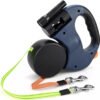
- Retractable dual dog leashes: These allow both dogs to explore at adjustable distances while keeping everything connected to a single handle. The best models include tangle-free designs and locking mechanisms.
For most multi-dog owners, a retractable dual leash offers the best combination of freedom and control. It keeps both leads managed from one handle, giving you a free hand for treats, waste bags, or your phone while still allowing each dog to move naturally.
The Retractable Dual Dog Leash with LED Light and Lock from Cuteness of Dogs is a practical example of this type of setup. It features a 360-degree rotating lead head that prevents tangling, a one-hand brake and lock system, and built-in reflective stitching for visibility on evening walks. It supports up to 100 pounds total weight, making it suitable for two small-to-medium-sized dogs.
Step Three: Introduce Paired Walks Gradually
Once both dogs can walk well individually and you have the right equipment, it is time to bring them together. However, do not simply clip both leads on and head to the busiest park in your neighbourhood.
Start in a controlled, familiar environment. Your garden or a quiet street you both know well is ideal. Keep the first few paired walks short, around ten to fifteen minutes, and focus on rewarding calm behaviour from both dogs simultaneously.
Here are practical tips for your first paired walks:
- Keep both dogs on the same side of your body to reduce crossing and tangling
- Use each dog’s name individually when giving commands, so they learn to respond independently
- Carry high-value treats that both dogs enjoy and reward them frequently for staying calm
- If one dog starts to pull or become reactive, stop walking entirely and wait for them to settle before moving again
- End every walk on a positive note, even if you need to cut it short
How to Handle Common Challenges When You Walk Two Dogs at Once
Even with preparation, you will encounter situations that require quick thinking. Here are the most common challenges and how to manage them.
One Dog Pulls While the Other Walks Nicely
This is the most frequent issue. The puller creates tension that the calmer dog feeds off, and soon both dogs are dragging you down the street. When this happens, stop immediately. Do not keep walking. Wait until both dogs have all four paws on the ground and the leads are slack, then reward and continue. Consistency is everything here.
Dogs React Differently to Distractions
One dog might ignore a passing cyclist while the other lunges at it. Managing two different temperaments is one of the trickiest parts of learning to walk two dogs at once. Position the more reactive dog on your inside (closest to your body) and the calmer dog on the outside. This gives you more leverage over the dog that needs it.
Tangled Leads
This is where equipment makes the biggest difference. A dual leash with a 360-degree swivel mechanism virtually eliminates tangling, even when both dogs circle around each other. Compared to holding two separate leashes, a tangle-free dual dog leash reduces the time you spend stopping to untangle by a significant margin. Many owners who switch to a retractable dual leash report that tangling becomes a non-issue.
One Dog Needs a Toilet Break
When one dog stops to relieve themselves, use this as an opportunity to practice a sit-stay with the other dog. It reinforces patience and keeps the walk structured.
Safety Tips for Walking Two Dogs at Once
Safety should always be your top priority, especially when managing two animals simultaneously. Keep these guidelines in mind:
- Always walk during appropriate weather conditions. In summer, use the five-second rule: place the back of your hand on the pavement and hold it for five seconds. If it is too hot for your hand, it is too hot for your dogs’ paws.
- Carry fresh water on longer walks, particularly during warmer months.
- Use reflective gear or LED-equipped leashes for early morning and evening walks. Visibility is critical when you are managing two dogs near traffic.
- Avoid retractable leashes near busy roads. Lock the leash to a shorter length in high-traffic areas and only extend it in parks and open spaces.
- Keep identification tags and microchip details up to date for both dogs.
For a comprehensive range of dog travel accessories including waste bags, leashes, and safety gear, explore what is available to make every walk safer and more enjoyable.
What to Look for in a Dual Dog Leash
If you are shopping for a dual dog leash, not all products are created equal. Here are the features that separate a good dual leash from a frustrating one:
- Tangle-free swivel design: A 360-degree rotating connector is essential. Without it, two leads wrapped around each other defeats the entire purpose.
- One-hand locking mechanism: You need to be able to stop both dogs instantly with one hand. Look for a brake and lock system you can operate with your thumb.
- Appropriate weight rating: Make sure the leash can handle the combined weight of both your dogs with a margin of safety.
- Comfortable ergonomic grip: You will be holding this handle for 30 to 60 minutes at a time. A soft, non-slip handle prevents hand fatigue and blisters.
- Reflective elements or LED lighting: Evening walks are safer when drivers and cyclists can see you from a distance.
- Built-in waste bag holder: A small convenience that makes a big difference when your hands are already full.
When comparing options, the Retractable Dual Dog Leash from Cuteness of Dogs checks all of these boxes. Its ergonomic handle, corrosion-resistant chrome hooks, and integrated LED flashlight make it a well-rounded choice for daily walks with two dogs.
Building a Long-Term Walking Routine
Consistency is the key to success when you walk two dogs at once. Dogs thrive on routine, and walking together at the same time each day reinforces the behaviour you want.
Aim for at least one structured walk per day where both dogs practise walking calmly side by side. Over time, you can gradually introduce more challenging environments, longer distances, and busier locations. Many owners find that after four to six weeks of consistent paired walks, their dogs begin to self-regulate and match each other’s pace naturally.
Remember that every dog is different. Some pairs will gel quickly, while others may need more time and patience. Age differences, breed characteristics, and individual temperaments all play a role. The important thing is to stay patient, reward progress, and adjust your approach as needed.
If you are looking for more advice on caring for your dogs, visit the Cuteness of Dogs blog for practical guides on everything from nutrition to grooming.
Frequently Asked Questions
Is it safe to walk two dogs on one leash?
Yes, it is safe to walk two dogs on a single dual leash, provided the leash is rated for the combined weight of both dogs and includes a tangle-free design. Dual leashes with locking mechanisms give you control over both dogs from one handle while keeping your other hand free.
How do I stop my two dogs from pulling in different directions?
Start by training each dog to walk on a loose lead individually. When walking them together, keep both dogs on the same side and reward them for staying close. If pulling occurs, stop walking until both leads are slack, then continue. Consistency is more effective than any single correction.
What is the best leash for walking two dogs at once?
A retractable dual dog leash with a 360-degree swivel, one-hand lock, and reflective elements offers the best balance of freedom and control. Look for a model that supports your dogs’ combined weight and includes an ergonomic handle for comfort on longer walks.
Can I walk two dogs of different sizes together?
Yes, but position the larger dog on your dominant side and the smaller dog on the other. Use a dual leash that allows independent length adjustment so each dog can walk at a comfortable pace. Start with shorter walks to let both dogs adjust to walking together.
How long should paired walks be for two dogs?
Start with ten to fifteen minutes and gradually increase to thirty or sixty minutes as both dogs become more comfortable. The ideal duration depends on your dogs’ age, breed, fitness level, and the weather conditions.
Final Thoughts
Learning to walk two dogs at once does not require professional training or complicated techniques. It requires patience, the right gear, and a commitment to consistency. Start by building a solid foundation with individual training, invest in equipment designed for dual-dog walking, and introduce paired walks gradually.
The reward is worth every bit of effort. Imagine stepping outside with both of your dogs walking calmly beside you, enjoying the fresh air together without a single tangled lead or pulled shoulder. That experience is absolutely achievable, and it starts with the steps outlined in this guide.
If you are ready to upgrade your walking setup, take a look at the full range of products at Cuteness of Dogs and find the gear that makes every walk enjoyable for you and your dogs.